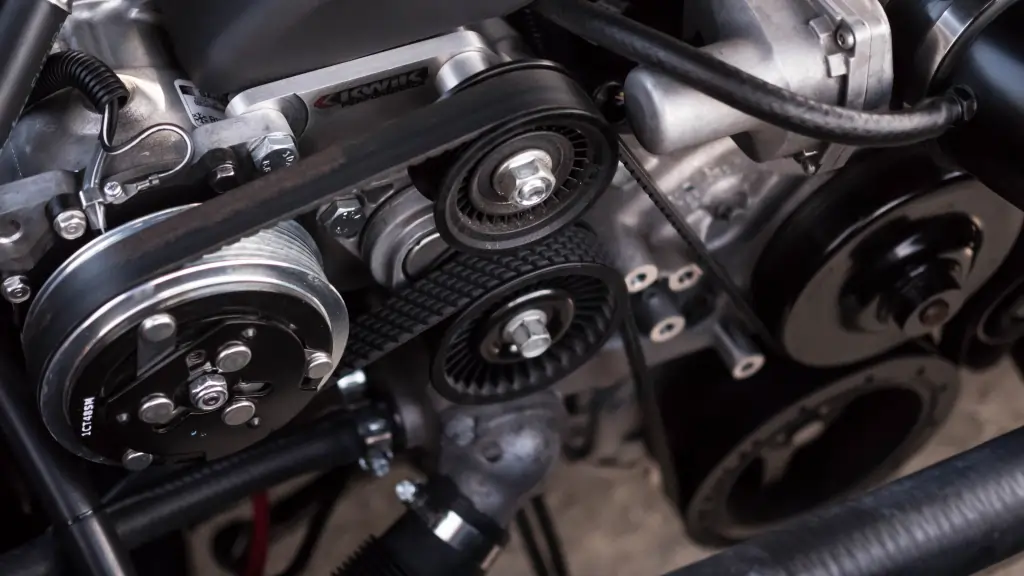
A hydraulic valve block pulled from a longwall shearer carries contamination that bears no resemblance to the greasy workshop component most cleaning guides were written around. Baked carbon, embedded silica, hardened scale, and carbonised lubricants do not respond to standard ultrasonic parameters, and specifying the wrong system means components return to service still carrying the residues that caused premature failure in the first place.
Selecting the right industrial ultrasonic cleaner for mining and heavy engineering demands a fundamentally different approach to specification. Power density, frequency selection, and chemistry must be matched to the actual contamination profile, not to a default catalogue setting designed for lighter industrial applications. Get any one of those parameters wrong and the investment in capital equipment delivers a fraction of its potential.
This analysis works through each decision point in detail. From understanding why mining contamination behaves differently, through the physics of cavitation aggression and detergent chemistry, to tank sizing, automation, and practical system specification, the sections that follow give procurement and maintenance managers the technical framework needed to specify a system that genuinely copes with the loads their components carry.
Why Mining Contamination Is a Different Problem Entirely
Mining and heavy engineering impose contamination loads that sit in a categorically different class from general industrial soiling. A cylinder head returning from an underground haul truck carries baked-on carbonised lubricant that has been heat-cycled repeatedly under extreme load. Hydraulic valve bodies accumulate sludge that started as fluid and degraded, under heat and pressure, into near-solid deposits bonded to internal galleries. Embedded abrasives, silica, iron oxide, and process grit, are not sitting on the surface; they are mechanically lodged inside surface pores and recesses that no brush or pressure washer can reach without simply redistributing the particles further.
Standard ultrasonic settings and generic detergents are calibrated for lighter industrial soiling. Applied to mining components, they produce surface-level agitation rather than genuine deposit removal: cycle times extend, cleaning is incomplete, and residual contamination remains in the blind holes, threads, and internal passages where it does the most damage.
Baked carbon presents a specific problem. On injection nozzles, valve assemblies, and cylinder heads, carbonised deposits resist chemical attack alone because the hardened outer layer prevents the detergent from reaching the substrate bond. What is needed first is the mechanical disruption of high-energy cavitation to fracture that outer layer; only then can matched chemistry penetrate, lift, and suspend the broken material. The two effects are interdependent. Cavitation without the right chemistry leaves fractured contamination in the bath. Chemistry without sufficient cavitation energy never breaches the deposit surface.
Embedded abrasives compound the problem further. Pressure cleaning moves grit across surfaces; it does not extract particles from within pores. Correctly specified ultrasonic cavitation acts from within the liquid surrounding the component, dislodging particles from cavities that contact cleaning methods cannot reach.
The consequences of getting this wrong are not cosmetic. Residual contamination on hydraulic valve bodies, fuel injectors, or rotating assemblies drives premature failure. In mining, where component lead times are long and unplanned downtime carries significant operational cost, removing hidden contaminants before they cause damage is a maintenance priority, not a finishing step.
The Three Parameters That Determine Cleaning Outcome
Understanding why mining contamination resists standard cleaning is only half the picture. The more actionable question is: which variables actually determine whether a cleaning cycle succeeds or fails, and how does each one behave differently under mining-grade contamination loads?
Three interdependent parameters govern every ultrasonic cleaning outcome: mechanical effect, chemical effect, and water quality. In light industrial applications, a shortfall in one can often be offset by extending cycle time or raising bath temperature. In mining, that compensation logic breaks down. Contamination resistance is too high, and the tolerance for incomplete cleaning is too low.
Mechanical effect is the primary differentiator. Hardened scale and carbonised lubricant layers require genuine mechanical disruption at the deposit interface. Those topics are developed in detail in the sections on power density and frequency.
Chemical effect is not a secondary consideration. Once cavitation fractures a deposit, it is the cleaning chemistry that lifts the dislodged material into suspension and keeps it there. Without matched chemistry, re-deposition and bath saturation follow. Chemistry is a core variable, not an afterthought, and the detergent-to-contaminant match is as critical as any equipment specification.
Water quality affects cavitation formation directly. Dissolved gas content in the bath fluid can suppress bubble collapse energy, reducing the mechanical force the system can deliver. Hard water interferes with detergent chemistry by competing with surfactants and promoting scale formation within the bath itself. Using deionised or appropriately conditioned water, and running degas cycles before cleaning begins, are standard practice in high-performance industrial ultrasonic systems operating under demanding contamination loads.
Each parameter must be correctly specified before the first component enters the tank.
Power Density: Why 20+ Watts Per Litre Is the Starting Point for Mining
Of the three parameters, mechanical effect is where mining applications most frequently expose the limits of inadequate equipment. That limit is measurable: for mining-grade contamination, hardened scale and carbonised deposits, a minimum of 20 watts per litre is required to generate the cavitation forces necessary to fracture those deposits rather than simply agitate the bath fluid around them.
Many low-cost imported units available online operate well below this threshold. The result is not “slower cleaning” but a categorically different cleaning mechanism: surface-level agitation that clears accessible faces while leaving contamination intact in blind holes, threaded bores, and internal galleries. These are precisely the cavities where residual contamination causes premature failure in hydraulic valve bodies and fuel injection components.
A common misconception is that higher power density risks surface erosion on the components being cleaned. The relationship is not linear in that direction. Correctly controlled high-power-density cavitation, at the appropriate frequency, removes contamination without attacking the substrate. It is inadequate power that creates risk: operators compensate with extended cycle times, and prolonged exposure to even moderate cavitation energy can induce surface fatigue on softer alloys. Specify the power correctly from the outset, and cycle times are controlled rather than open-ended.
Kleentek’s industrial ultrasonic cleaning systems are engineered to deliver consistent power density across the full tank volume, not only at the transducer faces, using generators and transducers built for continuous industrial duty rather than intermittent light-commercial cycles.
For procurement managers evaluating suppliers, one specific question resolves most ambiguity: request documented output power density within the cleaning zone, not rated input wattage. Input wattage does not account for transducer efficiency or energy losses through the tank wall and fluid. A unit rated at high input wattage can still deliver inadequate cavitation output. Confirmed output density, measured within the working volume, is the only figure that matters for specifying a mining-capable system.
Frequency Selection: Matching Cavitation Aggression to the Component
Power density and frequency work together; specifying one without the other leaves the outcome to chance.
At around 20 kHz, ultrasonic transducers generate large cavitation bubbles that collapse with substantial implosion force. That aggression is precisely what hardened mineral scale, baked carbon, and mechanically embedded abrasives require: the bubble collapse physically fractures the deposit, creating the surface disruption that allows chemistry to penetrate and lift contamination from blind holes, thread roots, and internal galleries. For most mining and heavy engineering components, low-frequency operation is the correct primary specification.
At 68 to 200 kHz, cavitation bubbles are smaller and their collapse energy is proportionally lower. The cleaning action is finer and less mechanically forceful, which suits precision hydraulic valve components, injector assemblies, or any part where dimensional tolerance or surface finish must be preserved. Applying low-frequency aggression to these components carries unnecessary risk; applying high-frequency operation to a contaminated crusher shaft or hydraulic cylinder body produces inadequate cleaning force.
Many mining maintenance operations handle both categories. A workshop servicing heavy structural components alongside precision hydraulic assemblies should consider a multi-frequency or dual-stage system that can switch between aggressive and fine-cleaning modes rather than compromising on a single frequency that serves neither application well. This is one area where the role of advanced cleaning systems in efficiency and safety becomes directly relevant to procurement decisions.
Frequency also interacts with component geometry and mass. Large, dense parts and complex geometries can produce uneven cavitation coverage across the full surface, and system design must account for transducer placement, tank geometry, and component orientation to address this.
The common specification error is defaulting to catalogue-standard frequency rather than the actual contamination profile. Kleentek’s pre-purchase cleaning trials eliminate that guesswork, providing application-specific validation before any capital commitment is made.
Chemistry Matching: The Direct Link Between Detergent Selection and Cleaning Success
Frequency determines how cavitation energy is delivered; chemistry determines what happens to the contamination once it is dislodged. The two parameters are inseparable, and getting chemistry wrong wastes every watt of mechanical work the system produces.
Cavitation fractures deposits; chemistry lifts them into suspension and prevents re-deposition, without the match, the bath redistributes rather than removes.
Mineral scale and heat-baked inorganic deposits require alkaline formulations carrying chelating agents. These agents attack the ionic bonds that lock scale to metal surfaces, breaking the deposit’s adhesion so cavitation can complete the removal. Neutral or mildly acidic chemistries do not disrupt those bonds; the result is a residual film that persists regardless of how long the cycle runs.
Carbonised lubricants and baked-on greases are a separate chemistry problem. The hydrocarbon chains have undergone thermal degradation and no longer respond to a general-purpose industrial degreaser. High-alkaline or specialist de-carbonising detergents are formulated specifically to penetrate and emulsify those hardened chains. Using the wrong product leaves a residue that can interfere with dye-penetrant inspection or prevent gasket and seal surfaces from seating correctly on reassembly.
Hydraulic sludge, a mixture of oxidised fluid, metallic fines, and degradation byproducts, requires detergents with strong emulsifying and dispersing agents. The priority is not only lifting the visible sludge layer but keeping dispersed particles in suspension throughout the cycle so they are carried out with the bath fluid rather than re-depositing on cleaned components or accumulating in filtration lines.
Kleentek supplies ultrasonic cleaning chemicals matched to its industrial equipment, with detergent selection validated against the specific contamination profile and substrate material for each application. The chemistry and the equipment are specified together as a single engineered solution, not sourced independently and tested at the expense of the first production run.
Pre-Treatment Protocols for Heavy Contamination Loads
Even with the right detergent matched to the contaminant, chemistry cannot perform effectively if the ultrasonic bath is overwhelmed before cleaning begins.
Components arriving from mining and heavy engineering sites frequently carry contamination loads that go beyond surface soiling: thick mud pack, bulk grease accumulation, and hydraulic sludge that has been heat-cycled into dense, semi-solid deposits. Introducing these components directly into an ultrasonic cleaning tank saturates the bath fluid rapidly. Dissolved solids suppress cavitation energy, the cleaning chemistry degrades faster, and fluid service life shortens substantially. For high-volume maintenance operations processing large components, the cost of premature bath replacement compounds quickly.
A pre-wash stage addresses this by stripping bulk contamination before the component reaches the ultrasonic tank. The appropriate pre-treatment format depends on the contamination volume and throughput demands of the operation:
- Hot soak tanks work well for components with heavy grease or sludge, softening deposits through thermal action and chemistry before the ultrasonic stage.
- Pressure rinse stations suit high-throughput workflows where rapid bulk removal is the priority before fine cleaning.
- Dedicated pre-wash ultrasonic stages operating at lower power and higher chemistry turnover offer the most controlled pre-treatment, particularly for complex geometries where pressure rinsing creates uneven results.
The staged workflow, pre-wash, ultrasonic clean, rinse, dry, is increasingly the standard configuration for mining maintenance facilities rather than a single-tank approach. This reflects a practical recognition: contamination levels in this sector are too high for any single cleaning stage to address reliably at production volumes.
Kleentek designs and supplies complete multi-line cleaning systems that integrate all of these stages as a single engineered solution. Assembling pre-wash, ultrasonic cleaning tanks, rinsing, and drying stages from different suppliers introduces compatibility gaps and workflow inefficiencies that erode the performance of each individual stage. For further application guidance across mining and heavy engineering contexts, Kleentek’s technical resources and application articles cover a range of industry-specific cleaning challenges.
Tank Sizing and Scalability for Mining and Heavy Engineering Components
Once pre-treatment and staged workflow decisions are made, the next specification variable is tank sizing, and in mining it carries more engineering weight than in almost any other sector.
Mining and heavy engineering components span an extreme size range. A single maintenance facility may process small valve bodies and fuel injectors alongside large hydraulic cylinders, drive shafts, and structural assemblies weighing several hundred kilograms. The cleaning system must accommodate both the physical envelope and the dead weight of each workpiece. Kleentek’s industrial ultrasonic tanks for mining and heavy industries range from 500 to 20,000 litres, covering bench-level component cleaning through to large-part industrial washing at a scale simply unavailable from smaller commercial equipment.
Tank volume selection is not just a question of physical fit. The ratio of component volume to bath volume directly affects cavitation uniformity across the part surface, chemistry concentration stability as contamination accumulates, and the rate at which the bath fluid becomes saturated with dislodged soiling. An undersized tank loaded with a large, heavily contaminated component will exhaust its chemistry rapidly, require more frequent fluid changes, and produce inconsistent cleaning results as cavitation fields are disrupted by the component’s proximity to the transducer array.
For centralised maintenance facilities servicing multiple mine sites, tank sizing must also account for throughput. Cycle time, component turnover rate, and the practical logistics of loading and extracting large, dense parts all influence which tank configuration is appropriate.
One specification point that is frequently overlooked: basket and transfer system load ratings. Heavy engineering components are dense, and a basket rated for light industrial loads will not safely handle a large hydraulic cylinder or gearbox housing. Basket failure under load is both a safety incident and an equipment damage risk. Low-cost systems routinely do not publish structural load ratings, which is itself a disqualifying indicator for mining procurement.
Automation, PLC Controls, and Remote Diagnostics in Mining Ultrasonic Systems
Getting the tank size right is a necessary condition, but it does not by itself guarantee consistent cleaning outcomes across shifts, operators, or sites. That requires control.
Repeatable, Documented Cycles via PLC and HMI Controls
In mining maintenance, cleaning outcomes must be independent of who is operating the system at any given shift. PLC and HMI control systems address this directly: validated parameters, including temperature, cycle time, power level, and chemistry concentration, are encoded into programmable cycles that run identically regardless of operator. Every component processed under the same programme receives the same cleaning treatment, which matters both for cleaning quality and for maintenance documentation. Cycle records become part of the component’s service history, supporting quality management requirements and lifecycle tracking.
Automated Lifting and Manual Handling Reduction
Large, dense mining components cannot be safely lowered into and extracted from cleaning tanks by hand. Automated lifting and transfer platforms remove that manual handling step, reducing injury risk and eliminating a throughput bottleneck in high-volume operations. Precise, controlled immersion and extraction also improves cleaning uniformity: components enter the bath at the correct orientation and dwell time without variation.
Automated Lids and Energy Efficiency
In remote Australian and New Zealand mining locations where energy costs are substantially higher than metropolitan baselines, automated lids are not a convenience feature. They retain bath heat between cycles, reducing the energy required to maintain operating temperature, and they limit solvent vapour release at the operator interface. Both factors have direct cost and occupational health implications in environments where compliance monitoring is rigorous.
Remote Diagnostics for Remote Operations
When a system requires technical attention at a site hours from the nearest service centre, response time is measured in days, not hours. Kleentek’s remote diagnostics capability allows engineers to monitor system performance, diagnose faults, and adjust parameters from off-site, resolving many issues without a site visit. For mining operations across regional and remote Australia and New Zealand, this is a meaningful operational continuity advantage. Further application-specific guidance is available across Kleentek’s industrial cleaning blog.
How to Specify an Industrial Ultrasonic Cleaning System for Mining Applications
With automation and controls locked down in your specification, the remaining decisions are technical and commercial. Work through them in this order.
Start with a contamination audit. Document the primary contaminant types your operation produces: scale, baked carbon, hydraulic sludge, embedded abrasives, or combinations. Record substrate materials across the component range, including steel alloys, aluminium, brass, and any exotic metals. Note the geometry and size envelope of every part the system must accommodate. Every downstream specification decision follows from this audit; skipping it means specifying against assumptions rather than actual loads.
Specify output power density, not input wattage. Require confirmed output density of at least 20 W/L across the full tank volume, input wattage does not reflect actual cavitation delivered.
Nominate frequency based on your contamination profile. 20 kHz is the primary mode for heavy mining soiling; if the system must also handle precision components, confirm multi-frequency capability.
Make chemistry specification non-negotiable. Require the supplier to validate matched chemistry for each contaminant type in your audit, chemistry and equipment must be specified together.
Evaluate total cost of ownership, not unit price. Low-cost imported industrial ultrasonic cleaning equipment may appear financially attractive, but typically lacks the power density consistency, build quality, and local support infrastructure that continuous mining-grade operation demands. Premature system failure, inconsistent cleaning outcomes, and the absence of accessible technical support represent costs that routinely exceed the initial price differential.
Equipment Quality and Why the Purchase Price Is Not the Cleaning Cost
The ultrasonic cleaning equipment market spans an enormous quality range. At the low end, mass-produced units are available at minimal cost but are designed for light-duty, intermittent use. They are not built for the continuous operational demands of a mining or heavy engineering maintenance environment, and the gap between what they promise and what they deliver under sustained industrial load is significant.
Three hardware characteristics separate industrial-grade equipment from entry-level units, and all three directly affect cleaning outcomes in mining applications.
Transducer bonding integrity determines whether transducers remain firmly attached to the tank wall under continuous high-power operation. Poorly bonded transducers delaminate progressively, reducing effective power output and creating uneven cavitation fields. The practical result is that certain zones of the tank clean inconsistently, leaving contamination on components processed in those areas, with no visible indication that the system has degraded.
Generator quality and stability determines whether rated power density is maintained over time or declines as components age under continuous duty. A generator that drifts from its rated output delivers less cavitation energy to the bath, directly reducing cleaning performance without triggering any alarm or fault condition.
Tank construction determines resistance to corrosion from industrial cleaning chemistry and physical stress from heavy components. Undersized tank walls and substandard steel grades compromise both service life and structural safety when handling dense mining components.
Kleentek’s industrial ultrasonic cleaning systems are backed by a 12-month warranty and supported by Australian-based engineers with direct experience in mining and heavy engineering maintenance. That is the relevant comparison baseline for procurement decisions, not the unit price of an imported light-duty product.
The procurement question is not whether a lower-cost unit can perform ultrasonic cleaning in principle. It is whether it can reliably sustain the power density, chemistry compatibility, and operational continuity required to clean mining-grade contamination at production volumes across years of continuous use. On that measure, the purchase price and the cleaning cost are rarely the same number.
Specifying for the Contamination, Not the Catalogue
The case for correct specification is the same argument made throughout this piece, distilled to a single procurement principle: mining contamination does not negotiate with a standard catalogue setting, and neither should your system specification.
The three parameters that determine whether a system will actually perform in your environment are non-negotiable. The 20 W/L floor and 20 kHz primary frequency are not upgrades, they are the starting specification for this contamination class. Matched chemistry, validated against your specific contaminant types and substrate materials, completes the combination; without it, the mechanical work of cavitation does not convert into clean components.
Pre-treatment, automation, and remote diagnostics are standard engineering for these conditions, not premium add-ons.
Total cost of ownership, not purchase price, remains the only evaluation framework that reflects real operational outcomes.
Kleentek’s process begins with a contamination audit: documenting what you are cleaning, what is on it, and what the system must reliably achieve before any equipment is specified. From there, Kleentek provides cleaning trials, matched chemistry supply, full system design consultation, and ongoing support across Australia and New Zealand. That is the starting point, and it is the right one.
Conclusion
Mining and heavy engineering demand cleaning systems engineered to the application, not selected from a catalogue. The right system starts with accurate contamination analysis, pairs appropriate power density and frequency with matched chemistry, and incorporates the automation and pre-treatment workflows that industrial duty requires. Total cost of ownership, not purchase price, is the only evaluation framework that reflects real operational outcomes.
Components that run cleaner run longer. Maintenance cycles become predictable. Downtime shrinks. These are measurable returns, and they begin with a specification process grounded in what your operation actually puts through a cleaning system.
If your current cleaning approach is struggling with heavy contamination loads or inconsistent results, start with a contamination audit. Contact Kleentek to discuss your components, your contaminants, and what a correctly specified system can deliver for your operation across Australia and New Zealand.